

When you hear the word investing, what comes to mind?
Watching the stock market all day? Picking individual companies? Knowing exactly when to buy and sell? Or needing a huge amount of money before you can even get started?
Investing can feel complicated, particularly if you’re new to it. But understanding some of the basic principles can make the subject feel a lot less intimidating.
As part of our partnership with AJ Bell, we’re breaking down some of the common myths around investing and exploring what terms like diversification and long-term investing actually mean.
This article is for general educational purposes only and isn’t financial advice or a recommendation to invest.
Myth: Investing Means Watching the Stock Market All Day
One of the biggest misconceptions about investing is that you need to constantly follow markets, buy and sell investments and react to every piece of financial news. That isn’t necessarily what investing looks like.
Investing is often associated with a long-term approach, where money is invested with a timeframe of years rather than days or weeks.
Of course, investments can rise and fall in value, and there are no guarantees that you’ll get back what you originally invested. But understanding that short-term market movements are a normal part of investing is an important part of learning how it works.
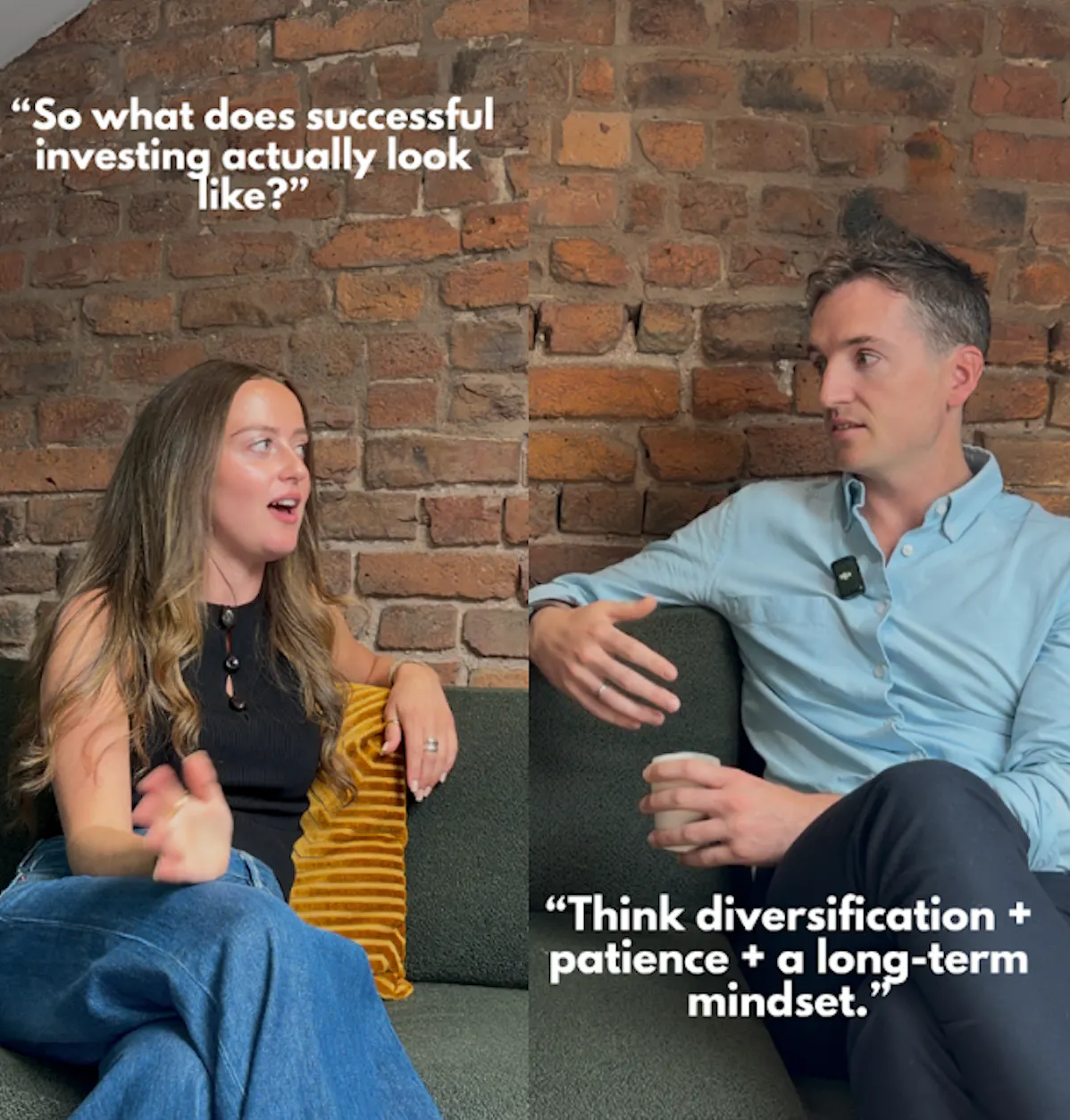
So, What Does Successful Investing Look Like?
There’s no single formula for successful investing, and past performance can’t tell us exactly what will happen in the future. However, three concepts you’ll hear regularly when learning about investing are diversification, patience and taking a long-term view.
Rather than trying to predict exactly what the market will do next, these ideas are about understanding risk and how investments can behave over time.
What Is Diversification?
Diversification sounds complicated, but the idea behind it is relatively simple: not putting all your eggs in one basket.
Rather than relying on the performance of one company, sector or type of asset, a diversified portfolio spreads money across a range of investments.
Different investments can perform differently at different times, so diversification can help spread risk. However, it doesn’t remove investment risk altogether or guarantee a positive return.
It’s simply one of the key concepts worth understanding when learning about investing.
Do More Expensive Investments Perform Better?
Another common assumption is that a more expensive investment must automatically be a better investment. But price and performance aren’t the same thing.
Different investments and funds come with different fees and charges, and a higher fee doesn’t guarantee better performance.
There may be circumstances where a more expensive investment offers features or an investment approach that someone values, but understanding what you’re paying for and the impact charges can have on returns is an important part of learning about investing.
How Do People Actually Start Investing?
This is often where things can begin to feel overwhelming.
There are numerous investment platforms, accounts, funds and other investment options available in the UK. For someone completely new to investing, knowing what they all mean, never mind understanding the differences between them can feel like a lot.
That’s why learning the basics first can be useful.
Manchester is also home to major financial businesses helping people access investments, including our MYP partner AJ Bell.
AJ Bell offers investment platforms through which customers can manage investments and products including Stocks and Shares ISAs and pensions. The important thing for anyone considering investing is to understand the products available, the associated risks and whether investing is appropriate for their own circumstances.

What Happens When Markets Fall?
Markets don’t move in a straight line. There will be periods when investments rise and periods when they fall, and seeing the value of an investment drop can understandably feel uncomfortable.
One of the topics discussed in our AJ Bell series is the temptation to react emotionally to those movements or try to predict exactly when markets will rise and fall.
Trying to “time the market” means attempting to buy and sell based on predictions about future market movements. In reality, consistently predicting those movements can be extremely difficult.
That’s why you’ll often hear patience, consistency and a long-term mindset discussed when learning about investing.
That doesn’t mean someone should simply ignore their investments or never make changes. Instead, it’s about understanding that market fluctuations are part of investing and that decisions should be considered in the context of someone’s individual circumstances, goals and attitude to risk.
Investing Doesn’t Have to Feel Intimidating
You don’t need to become a stock market expert overnight to start understanding how investing works. Learning some of the basic terminology from diversification and risk to investment charges and long-term investing can make the financial world feel much more accessible.
Through our partnership with AJ Bell, Manchester Young Professionals is helping to open up more conversations around money and investing, giving our community access to educational content that breaks down topics that can otherwise feel unnecessarily complicated.
Because sometimes, understanding the basics is the best place to begin.
Important Information
This article is for general educational and informational purposes only and does not constitute financial, investment or tax advice or a personal recommendation. Whether investing is appropriate will depend on individual circumstances. The value of investments can go down as well as up, and you may get back less than you invest. Tax treatment depends on individual circumstances and tax rules can change.